

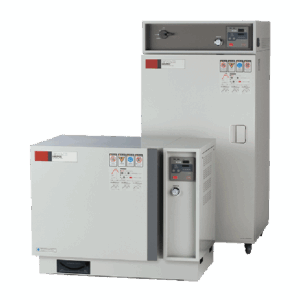
Thermal Shock Chamber
Thermal Shock Chamber
| Specification | KTS Model | ||||||||
| KTS 25-B2 | KTS 64-B2 | KTS 120-B2 | KTS 340-B2 | ||||||
| Test Basket Dimension (WXDXH) |
250 x 250 x 400 [mm] 10 x 10 x 16 [In] |
400 x400 x 400 [mm] 16 x 16 x 16 [In] |
550 x 550 x 400 [mm] 22 x 22 x 16 [In] |
700 x 700 x 700 [mm] 27.5 x 27.5 x 27.5 [In] |
|||||
| Test Basket Volume | 25 Ltr 0.9 Cuft |
64 Ltr 2.3 Cuft |
120 Ltr 4.2 Cuft |
340 Ltr 12 Cuft |
|||||
| Hot Zone Temperature Range |
50°C to + 200°C 122°F to + 392°F |
||||||||
| Cold Zone Temperature Range |
50°C to – 70°C 122°F to – 94°F |
||||||||
| Basket Transition | < 10 sec | ||||||||
| Recovery Time | < 5 min | ||||||||
Description
Thermal Shock Chamber for Rapid Temperature Change and Environmental Stress Testing
Advanced Thermal Shock Chamber for Product Reliability and Durability Testing
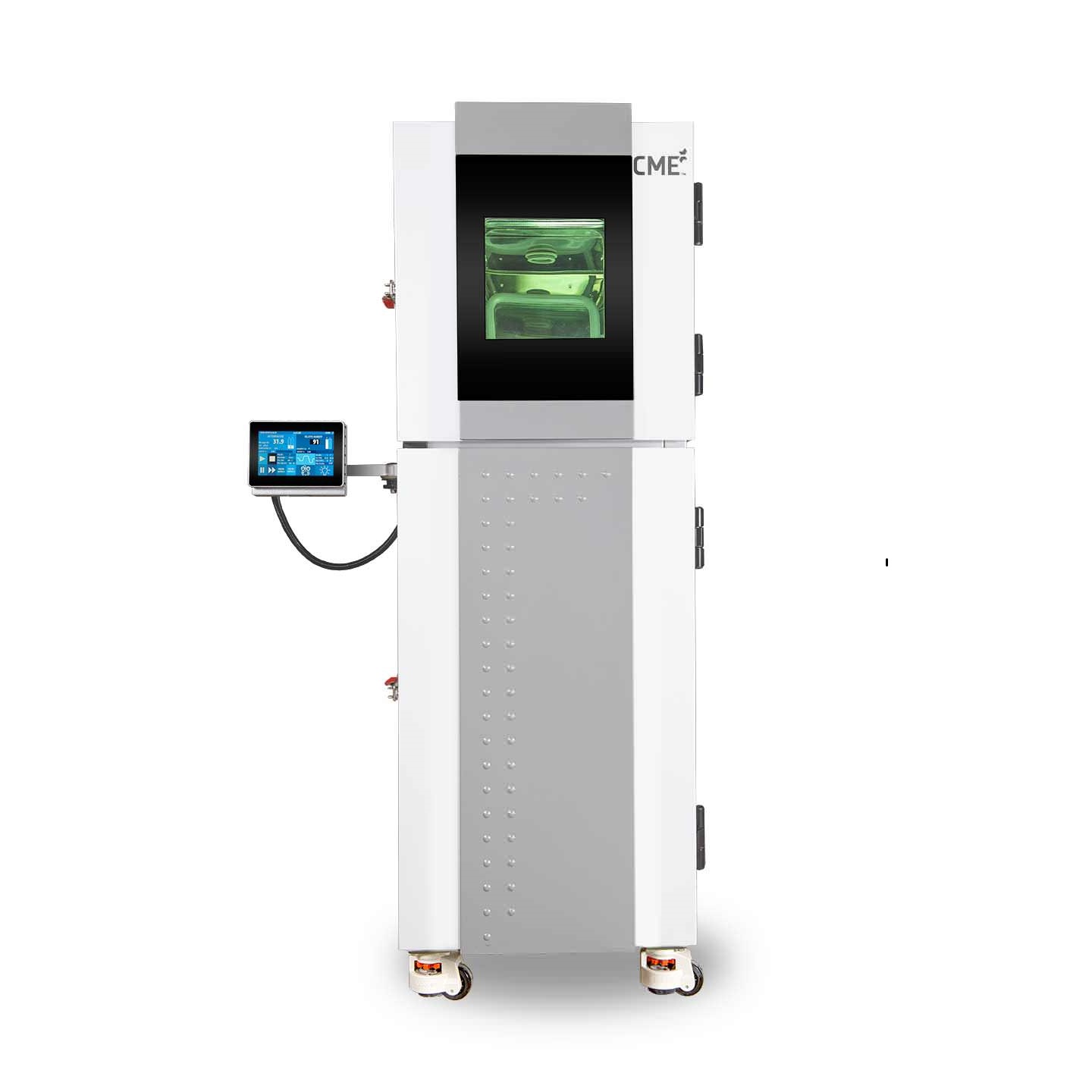
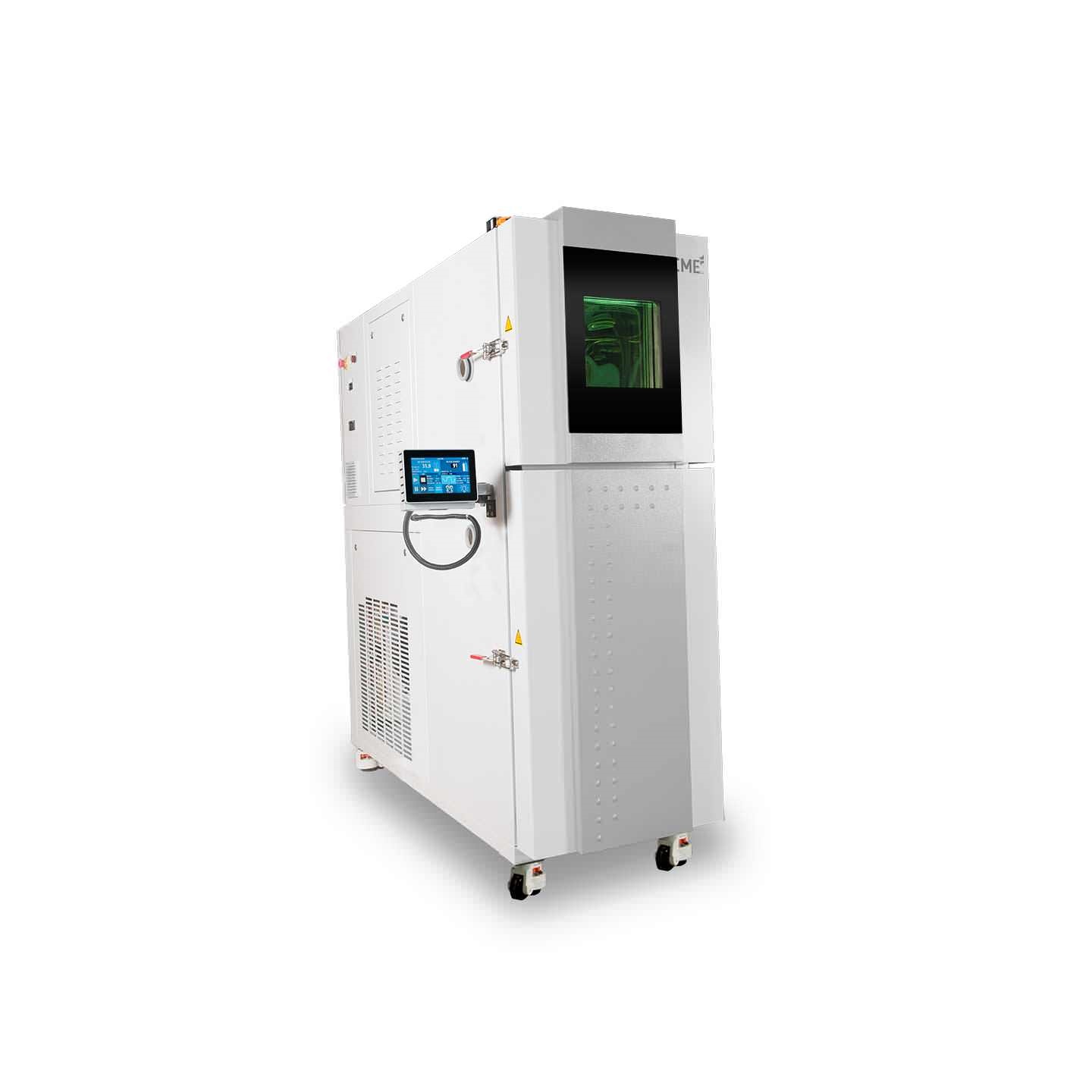
The Thermal Shock Chamber is a high-precision environmental testing system designed to evaluate the durability, reliability, and performance of materials, electronic components, and finished products under sudden and extreme temperature changes. This advanced thermal shock testing chamber simulates real-world environmental conditions where products experience rapid thermal expansion and contraction that can lead to cracking, deformation, material fatigue, or performance failure.
The Thermal Shock Chamber is widely used for environmental stress testing, accelerated aging analysis, product reliability validation, and thermal durability testing in industries such as electronics, automotive, aerospace, defense, renewable energy, semiconductor manufacturing, and material research laboratories.
Rapid Temperature Change Testing for Thermal Stress Analysis
The Thermal Shock Chamber rapidly transfers test samples between hot and cold temperature zones to reproduce severe environmental conditions experienced during real-world operation. These rapid temperature transitions help engineers evaluate how products respond to sudden thermal stress and repeated thermal cycling.
The chamber helps identify:
- Material cracking
- Structural deformation
- Solder joint failure
- Thermal fatigue
- Insulation damage
- Component failure
- Delamination
- Performance degradation
This allows manufacturers to improve product reliability and reduce the risk of field failures.
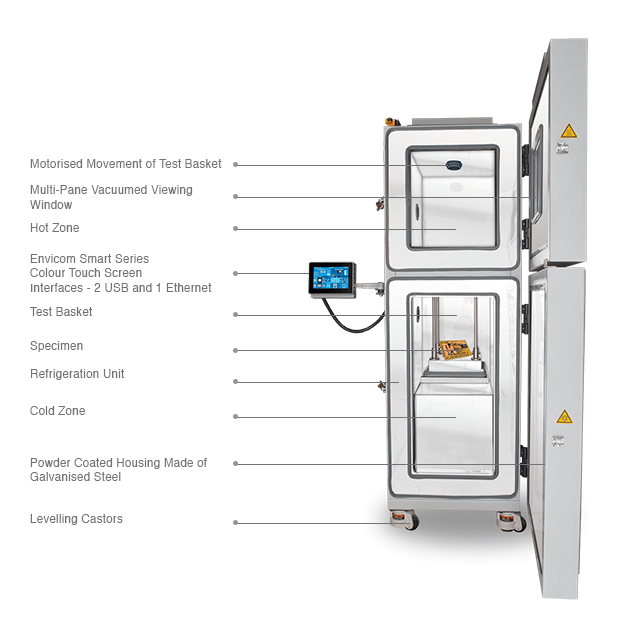
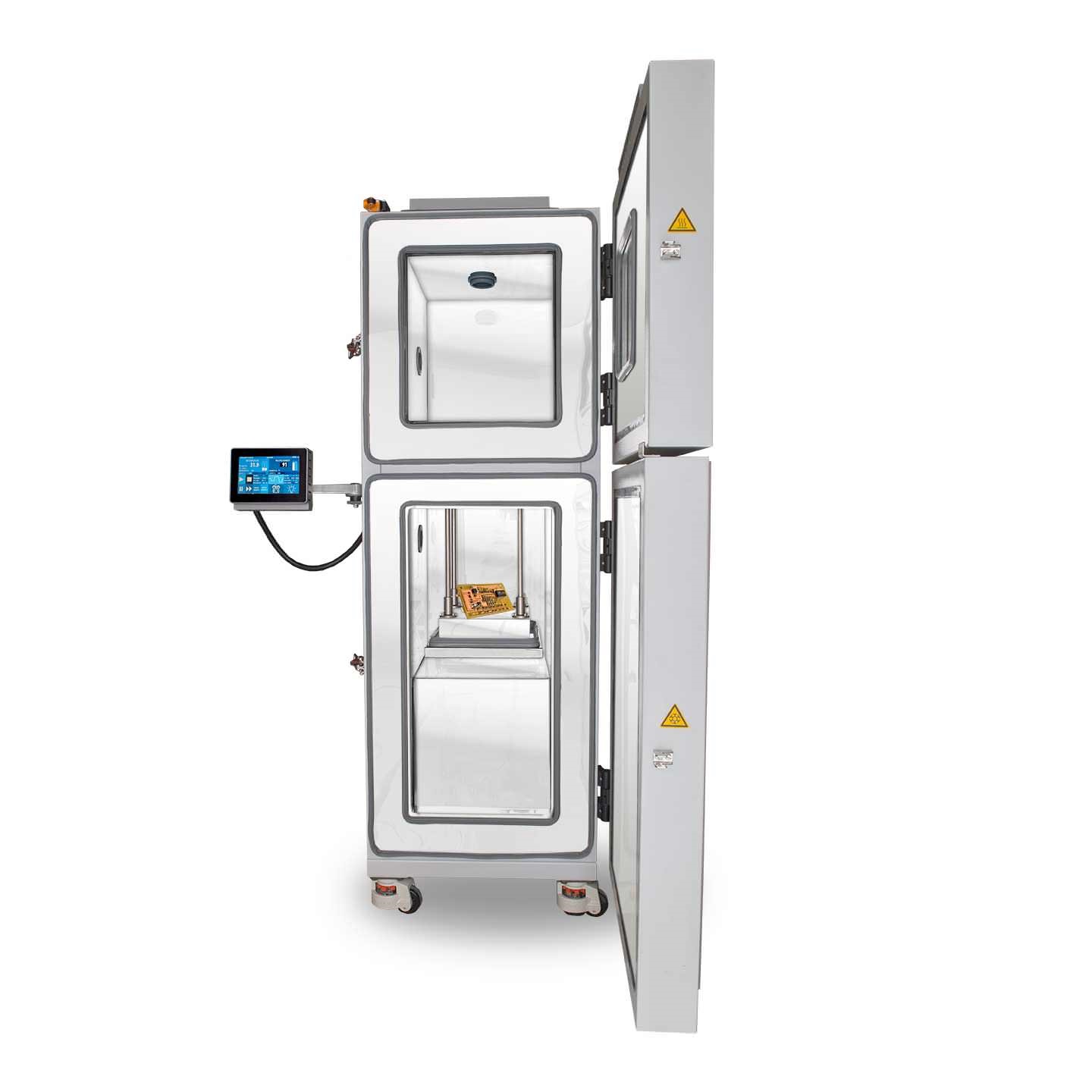
Dual-Zone and Three-Zone Thermal Shock Testing Systems
The Thermal Shock Chamber is available with:
- Dual-zone thermal shock systems
- Three-zone thermal shock systems
These systems alternate between high-temperature and low-temperature environments to achieve fast and accurate thermal shock simulation. The advanced chamber design ensures:
- Rapid temperature transition
- Stable thermal performance
- Uniform temperature distribution
- Consistent testing conditions
- Repeatable environmental simulation
This enables highly reliable thermal stress testing for critical industrial and electronic products.
Environmental Testing for Electronics, Automotive, and Aerospace Industries
Thermal shock testing is essential for evaluating products used in demanding operating environments. The Thermal Shock Chamber is widely used for:
- Electronics testing
- PCB reliability testing
- Semiconductor testing
- Automotive component testing
- Aerospace material testing
- Defense equipment validation
- Solar energy product testing
- Battery testing and validation
- Industrial product reliability testing
- Material research and development
The chamber supports advanced environmental simulation and product qualification testing for modern industrial applications.
Compliance with International Environmental Testing Standards
The Thermal Shock Chamber is designed to comply with major international testing standards, including:
- IEC 60068-2-14
- MIL-STD environmental testing standards
- JEDEC testing standards
- JIS testing standards
- ASTM environmental testing standards
This ensures reliable, repeatable, and standards-compliant environmental testing for product certification and quality assurance applications.
Advanced Temperature Control and Fast Transition Performance
The Thermal Shock Chamber is equipped with advanced environmental control technology to provide:
- Fast hot-to-cold temperature transitions
- Accurate temperature control
- Stable chamber operation
- Uniform airflow distribution
- High testing precision
- Reliable long-duration testing performance
These features help achieve accurate thermal shock simulation and consistent environmental stress testing results.
Accelerated Environmental Stress Testing and Product Validation
Thermal shock testing helps manufacturers evaluate the effects of thermal expansion and contraction on different materials and assemblies. This process is critical for:
- Accelerated aging analysis
- Product durability testing
- Reliability validation
- Thermal stress resistance evaluation
- Manufacturing defect detection
- Material compatibility analysis
- Product lifecycle testing
The chamber enables faster product development and improved product quality before market release.
Applications of Thermal Shock Chambers
The Thermal Shock Chamber is widely used in:
- Research laboratories
- Electronics manufacturing facilities
- Automotive testing centers
- Aerospace engineering laboratories
- Defense testing facilities
- Renewable energy industries
- Semiconductor manufacturing
- Industrial quality assurance departments
- Product development laboratories
The system supports environmental simulation, reliability analysis, and standards-compliant product testing.
Key Features of Thermal Shock Chamber
- Rapid temperature change testing capability
- Dual-zone and three-zone chamber systems
- Fast hot-to-cold temperature transitions
- Thermal stress and thermal fatigue testing
- Accelerated aging and reliability testing
- Uniform airflow and temperature distribution
- Precision environmental control system
- Product durability validation
- Environmental stress simulation testing
- Advanced programmable controller system
- Stable and repeatable testing performance
- Industrial-grade chamber construction
- International testing standards compliance
- High-accuracy environmental testing solution
Benefits of Using a Thermal Shock Chamber
The Thermal Shock Chamber helps manufacturers improve product reliability, reduce failure risks, validate environmental durability, and ensure compliance with global testing standards. By accurately simulating extreme thermal stress conditions in a controlled laboratory environment, the chamber accelerates product validation and improves long-term product performance.
Its advanced thermal control technology, rapid transition capability, and stable environmental simulation make it an ideal solution for industrial manufacturers, electronics laboratories, automotive testing facilities, aerospace applications, and research institutions.




Reviews
There are no reviews yet.