Description
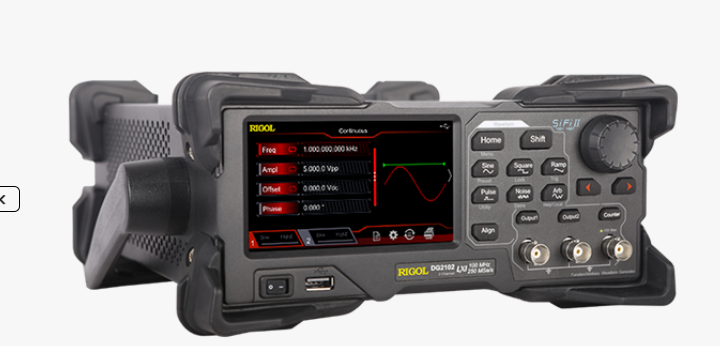
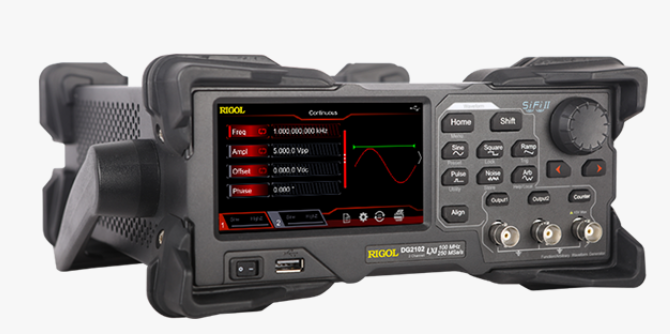
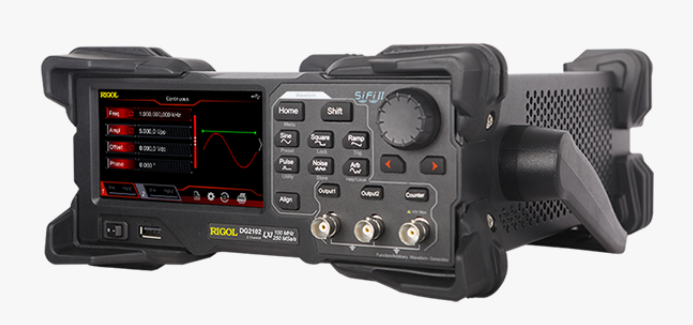
The Rigol DG2102 Arbitrary Waveform Generator (part of the DG2000 Series) is engineered for laboratories and R&D teams that demand uncompromised signal fidelity. When standard 14-bit generators fall short, this high-performance instrument delivers the accuracy required for complex electronics and communications testing.
Instead of struggling with signal noise, the DG2102 gives your team a massive analytical advantage. Consequently, you can generate flawless, complex waveforms to test your most sensitive circuits.
Core Technical Advantages
Stop settling for basic wave generation. The Rigol DG2102 is packed with industry-leading capabilities:
-
16-Bit Vertical Resolution: Provides 4 times the resolution of traditional 14-bit generators, capturing the finest signal details.
-
Advanced SiFi II Technology: This proprietary architecture generates arbitrary waveforms point-by-point. As a result, it recovers signals without distortion and reduces edge jitter down to an incredible 200 ps.
-
16 Mpts Memory Depth: Allows engineers to generate incredibly long, complex arbitrary waveforms without losing resolution.
-
Modern Touch Interface: Features a crisp 4.3-inch TFT color touch screen. Therefore, technicians can set up complex parameters quickly and intuitively.
Built for Modern Engineering
The DG2102 is essentially multiple instruments packed into one chassis. It functions as an arbitrary waveform generator, pulse generator, baseband generator, harmonic generator, and frequency counter (up to 240 MHz).
Furthermore, the fan-less design guarantees zero acoustic noise, making it the perfect addition to quiet laboratory environments.
Don’t compromise your circuit testing with inferior signals. Contact Nanotech today to request a custom quote or a technical datasheet for the Rigol DG2102!
Primary Engineering Applications The Rigol DG2102 is highly versatile across multiple technical sectors. Automotive engineers utilize this generator to simulate complex sensor signals and validate electronic control units (ECUs). Furthermore, in advanced educational laboratories, professors rely on its intuitive interface to teach complex signal theory. Finally, semiconductor test teams deploy it to verify the tolerance of integrated circuits under varying frequency conditions, ensuring optimal hardware reliability.





Reviews
There are no reviews yet.